Softie
Happiness for BeginnersSoftie is Duncan’s childhood comfort blanket, known in the family as his blankie. Its importance in the story lies not only in the security it represented to a small child but in one night when its absence set a chain of events in motion: Duncan’s distress sent Grandma GiGi back to the house, where she found his mother after she had taken pills. Years later, the memory of Softie helps Helen and Duncan understand their family history differently.
Identity and Early Use
Duncan was three when he forgot Softie at bedtime. He wore striped footed pajamas, and the blanket was familiar enough to be named and missed specifically; when Grandma GiGi was asked what Duncan called it, she remembered the name. The story presents it as an ordinary part of his bedtime routine, not as an object with significance to the adults around him until it is absent.
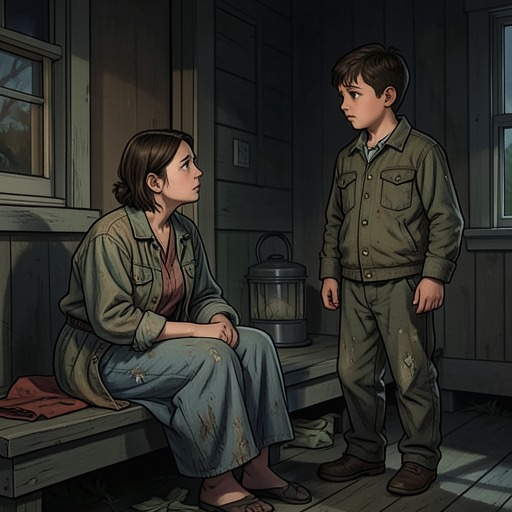
That absence upset Duncan intensely. After his mother drove away, Grandma GiGi fed the children spaghetti and began settling them for bed. When Duncan realized he did not have Softie, he cried for about an hour and a half. Grandma GiGi expected him eventually to tire himself out, but he kept wailing. The episode makes the blanket’s practical role plain: without it, a routine bedtime became an extended crisis for a three-year-old.
The Night Softie Was Missing
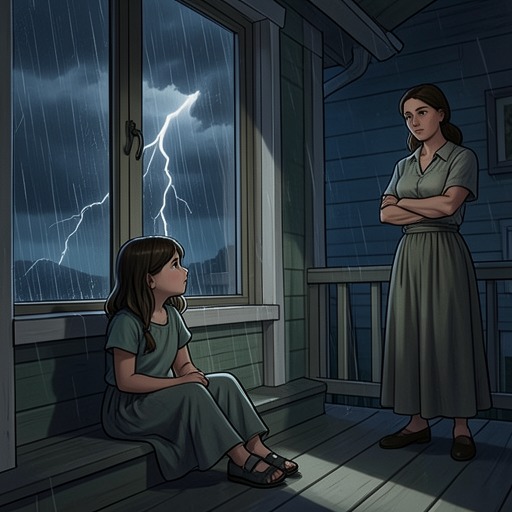
Helen, then a child herself, was awake to the disruption. She went to Grandma GiGi and urged her to go home and get Softie, warning that Duncan would otherwise stay awake all night. Grandma GiGi later recalled that Helen had already taken on the work of caring for her younger brother: she changed his diapers, put him to bed, and rocked him. On this particular night, Helen’s response was both an act of care for Duncan and the prompt that sent Grandma GiGi out of the house.
Grandma GiGi had planned to make Helen pancakes in the morning, take her home, and then leave for a sitting. Duncan’s crying gave her a reason to drive back for the forgotten blanket; she was glad for the break and let herself into the house. There she found the children’s mother in bed with Nathan’s teddy bear after she had taken a bottle of painkillers. Softie and the teddy bear are separate objects: Softie was Duncan’s missing blankie, while the teddy bear belonged to the dead brother, Nathan. The distinction matters because the discovery connects Duncan’s immediate childhood distress to the family’s earlier loss without making the two objects interchangeable.
A Domestic Object with Consequences
Grandma GiGi found the children’s mother in time. She later described returning from the hospital at four in the morning to find Helen asleep on the sofa in her clothes and Duncan tucked into bed. Her recollection emphasizes the children’s vulnerability: Helen had remained awake through the night, while Duncan had been upset enough that Grandma GiGi went back for Softie. The object’s significance thus exceeds its use at bedtime. Its absence occasioned the return trip that allowed Grandma GiGi to discover the emergency.
The account does not establish that Duncan’s distress caused his mother’s crisis, or that retrieving Softie resolved it. Rather, it traces a specific chain of circumstance: Duncan forgot the blanket, his crying prompted Helen to ask for it, and Grandma GiGi’s trip back led her to find his mother. Softie becomes consequential through its temporary absence, while the urgent discovery remains attached to the teddy bear with which the mother had gone to bed.
Reinterpreting the Family Past
The episode gains further meaning when Helen later recounts it to Duncan. He had believed that their mother left because he had been difficult as a child. Helen tells him that his crying over Softie sent Grandma GiGi home, where she found their mother after the overdose. Duncan then asks whether that was why their mother never came back, revealing how he had connected his childhood behavior to her absence. The memory makes Softie a key detail in correcting that painful belief: it helps explain how Grandma GiGi discovered the crisis, not why their mother made her choices or everything that followed.
The revelation also sits against Helen’s older resentment toward Duncan. After Nathan died, their mother became frantic with grief; two months later she was pregnant, and Helen believed she was trying to replace a brother who could not be replaced. Her parents separated within a year. Their mother struggled to care for Helen and Duncan in Evanston, and when Helen was nearly thirteen she left them with Grandma GiGi. Helen remembered taking on household and childcare responsibilities, then leaving for college and avoiding a reassessment of her relationship with Duncan. In a later conversation with Jake, she recognizes that she had never forgiven Duncan for not being Nathan. Softie’s story revisits that history from the moment when her childhood caregiving had a life-changing consequence: the little brother she resented was also the child whose need for his blanket brought Grandma GiGi back to the house.
Softie therefore links two scales of family memory. At bedtime it is the object Duncan cannot manage without; in the adults’ later recollections, it marks the contingency through which a hidden crisis was discovered. Its importance is not that it explains the family’s losses or repairs the damage between Helen and Duncan. Instead, the blanket gives them a concrete, shared event with which to revise what Duncan’s childhood distress meant and how Helen’s early role as his caregiver was bound up with the family’s larger upheaval.